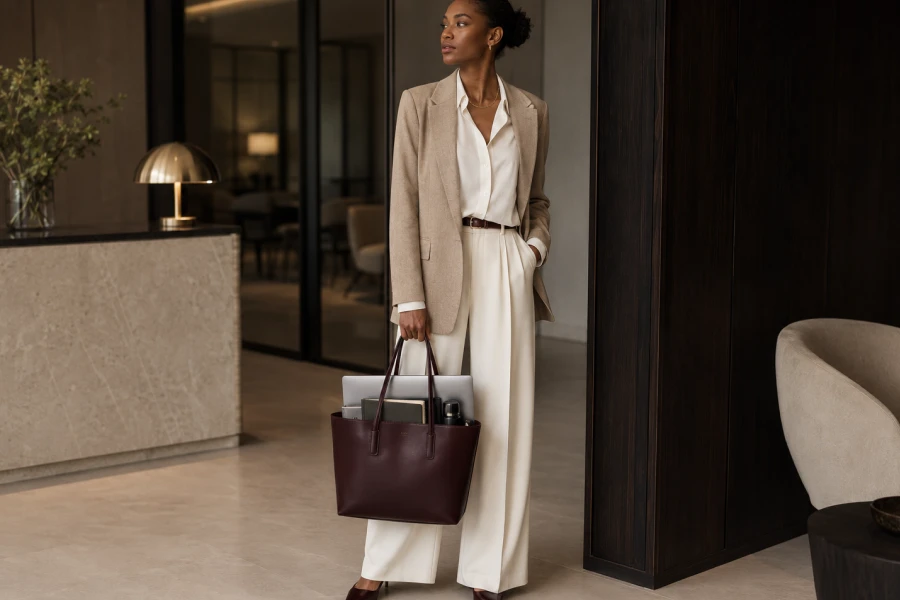
Finding a practical bag size for work starts with understanding what your workday actually demands. A polished bag should hold essentials without swallowing them into a dark, bottomless space. It needs enough structure for documents, tech, keys, personal items, and small beauty products. It also needs to look intentional with office outfits, casual Fridays, and after-work plans. Many work bags fail because they focus on appearance only. Others become heavy because they try to replace a desk drawer. The better choice sits between elegance and capacity. When your bag supports your day, your routine feels sharper before you even leave home.
Your work tools should determine your bag before trends do. A laptop user needs padding, width, and reliable straps. A tablet user may prefer a lighter structured tote. Someone who commutes by car has different needs than someone using trains or buses. Even lunch habits matter. Carrying meals, water, and gym items changes the required capacity. The work bag capacity method helps separate genuine needs from clutter. This prevents buying oversized totes that look professional but feel exhausting by noon.
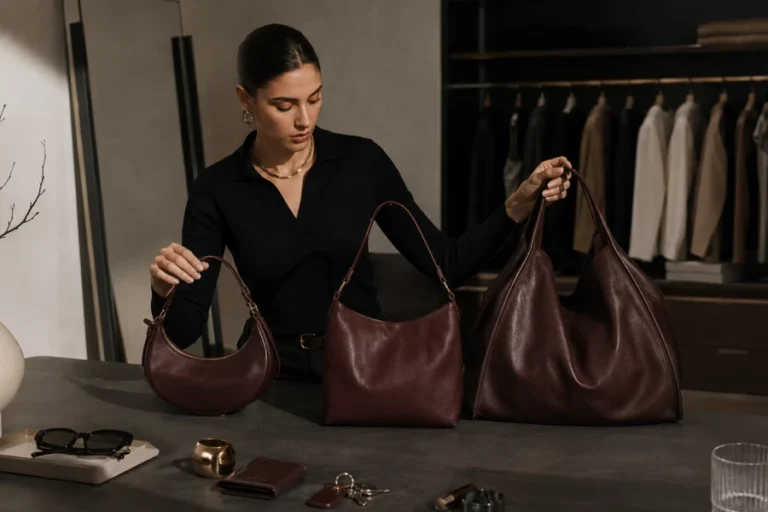
A spacious bag gives every essential a place. An overloaded bag collects everything you forgot to remove. The difference appears in weight, shape, and daily frustration. When a bag loses its silhouette, it usually holds too much. When your shoulder hurts, the size is no longer helping. A good work bag keeps documents flat, tech protected, and smaller items easy to find. Compartments matter, but they cannot fix poor editing. Before upgrading, empty your current bag completely. Notice what you actually used that week. That simple review often reveals the size you truly need.
Office style looks stronger when your bag matches your clothing proportions. A slim tailored outfit pairs well with a structured medium tote. Relaxed separates can support softer shapes. If your wardrobe leans minimal, hardware and scale become especially visible. A bag that is too bulky can make clean outfits look unfinished. A bag that is too small can feel unserious in professional settings. The right professional purse sizing approach helps your accessories reinforce your image. Your work bag should make you look prepared, not weighed down.
Material changes how size performs. Soft leather can expand beautifully, but it may collapse when underfilled. Canvas feels lighter, yet it may look too casual for some workplaces. Structured vegan leather or polished nylon can offer durability with cleaner lines. The best material depends on your commute, climate, and office expectations. Stiffer materials often protect laptops and papers better. Softer materials may feel more comfortable for long walking days. Consider how the bag stands when placed on the floor. If it always slumps, organization becomes harder. Shape retention makes a work bag feel more expensive and more useful.
The modern workday rarely ends at the office door. You may go from meetings to dinner, errands, classes, or travel. A practical bag must adapt without looking awkward in every setting. Medium-large bags usually perform best because they carry essentials while still looking intentional. Removable pouches can help shift from office mode to evening mode quickly. You can leave heavier items behind and carry only what you need. A smart daily bag organization plan keeps this transition simple. Flexibility matters when your calendar changes fast.
Start with your non-negotiables. Measure your laptop or tablet before shopping. Add the items you need every day, not every possible emergency. Then choose a bag that fits those things with a little breathing room. Extra space should help, not invite chaos. Look for comfortable straps, a secure closure, and an interior that makes sense. Test whether the bag works with your most common shoes and coats. A work bag is part of your daily uniform. When you choose it strategically, you save time, protect your belongings, and look more composed.

Leave a comment