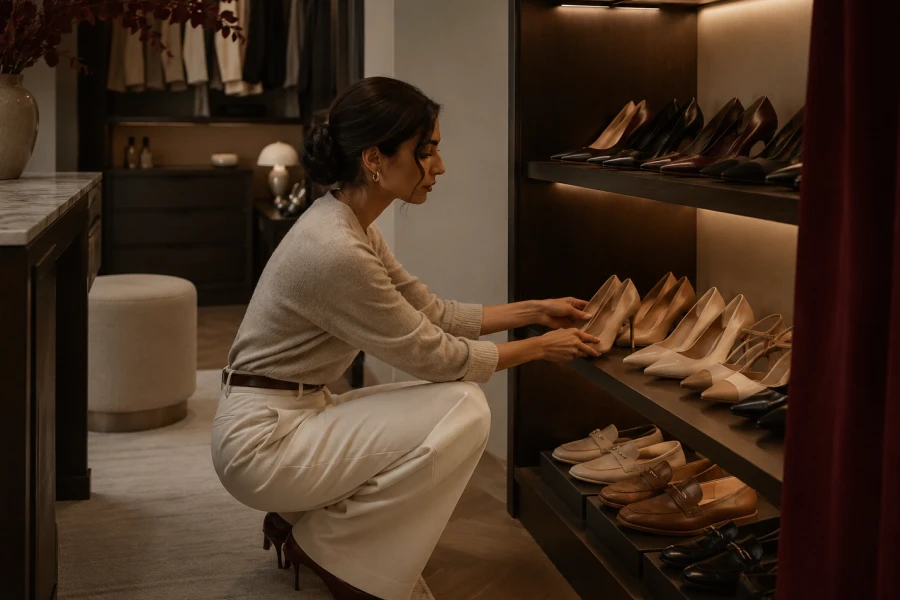
Decluttering shoes at home feels personal because footwear carries memories, hopes, and unfinished versions of ourselves. There are shoes bought for a different job, a different body, a different climate, or a different social life. Keeping them can feel harmless until they crowd every shelf. A good reset does not shame past purchases. It helps you understand what actually serves your present routine. The goal is a collection that supports getting dressed, not one that creates guilt. When you edit shoes honestly, your closet becomes clearer. You see your favorites faster and stop stepping around pairs you never wear.
Looking at shoes is not enough. Put them on, stand up, and walk across the room. Notice pressure points, slipping, stiffness, and balance. If a pair hurts within minutes, it will not improve during a full day. Also check whether the color and shape still match your current wardrobe. The footwear editing process helps you judge shoes by real use instead of emotional attachment. Honest testing turns vague uncertainty into clear decisions. Comfort deserves more authority than nostalgia.
Sort shoes into keep, repair, donate, sell, and discard categories. Keep pairs that fit, support your lifestyle, and appear in real outfits. Repair pairs only if you will schedule the repair quickly. Donate shoes that are wearable but no longer useful to you. Sell pairs with strong condition and recognizable value. Discard shoes that are damaged beyond practical use. These categories reduce mental clutter. They also prevent every decision from feeling dramatic. A pair can be beautiful and still leave your closet. The question is whether it supports your life now.
Many people fear decluttering will make their wardrobe boring. In reality, editing usually reveals your true style more clearly. When weak pairs leave, strong pairs become easier to see. You may notice favorite shapes, heel heights, colors, and materials. That information helps future shopping. A thoughtful shoe wardrobe organization plan protects personality while removing excess. You are not building a sterile closet. You are building a collection where every pair earns its place. Style feels stronger when clutter no longer competes for attention.
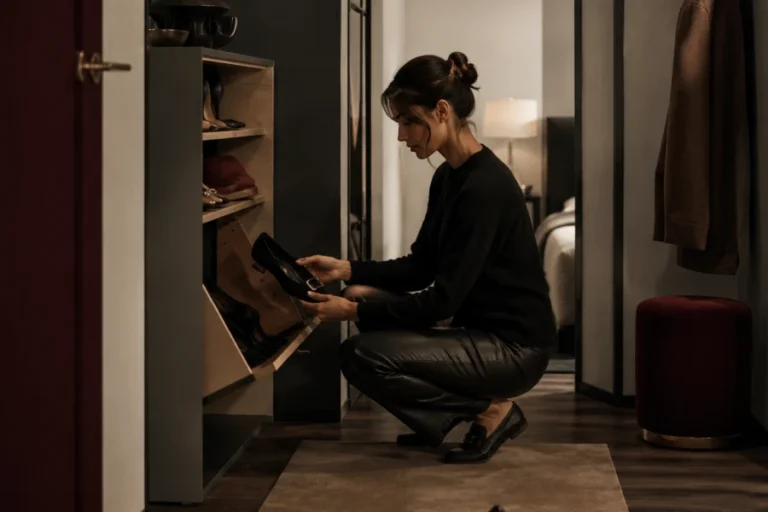
Daily footwear deserves the best access. Sneakers, flats, boots, or work shoes you wear constantly should not be buried behind formal pairs. After decluttering, place high-use shoes where you can reach them quickly. Store occasional pairs higher, deeper, or in protective boxes. This arrangement saves time and reduces morning frustration. It also keeps frequently worn shoes from piling near doors. Space is not only physical. It is visual and mental. When your daily shoes are easy to find, you start the day with less resistance. A clear setup supports faster decisions.
Shopping before decluttering repeats old mistakes. Decluttering shoes at home shows which gaps are real and which are imagined. You may discover that you do not need more black shoes. You may need comfortable neutral flats, weatherproof boots, or a cleaner storage solution. This clarity prevents impulse purchases. The smart shoe storage reset connects editing with future buying. Every new pair should solve a specific need. That standard makes your collection better, not just bigger.
Decluttering is not a one-time event. Shoes enter and leave your life as routines change. Set a review schedule twice a year, ideally before major seasonal shifts. Try on questionable pairs, clean favorites, and decide what deserves storage. Keep donation decisions moving instead of letting bags sit in corners. Maintenance feels easier after the first major reset. You already know your categories, standards, and storage limits. The system becomes familiar. Over time, your closet stops collecting outdated versions of your life. It becomes a practical, stylish tool for how you live now.

Leave a comment